

Table of contents
“Is it safe to manufacture skincare in China?” sounds like a sensible sourcing question. It is also too broad to protect a project.
A country is not a quality system. Two factories in the same industrial zone can have very different licensed scopes, documentation habits, change controls, equipment, and release practices. The more useful question is whether the exact supplier, site, product, package, and market can be connected by evidence.
The short answer
Choose on fit first, then verify the evidence behind the offer.
- Confirm the product format, development route and destination market fit.
- Match the legal entity, factory address and licensed scope.
- Define the approved formula, package, test plan and acceptance limits.
- Check change control, batch records, release evidence and file ownership.
Supplier signal this week
Do not qualify a skincare manufacturer from a badge wall. Qualify one evidence chain: legal factory, licensed scope, approved product, controlled production, batch release, and destination-market responsibilities.
This distinction matters because a manufacturing licence, a GMP certificate, a formula sample, and a market registration answer different questions. None of them, alone, proves that the final product will match the approved brief.
Start with project fit, then verify the evidence
A legitimate factory can still be the wrong factory for a particular project. Before comparing certificates, confirm the product format, whether the brief needs a ready formula, modification or full development, the packaging direction, destination market, expected order profile and records the buyer will need. A clear OEM/ODM development route should expose those trade-offs before sampling begins.
The first useful supplier answer is often not “yes.” It is a precise explanation of what can be made on the proposed route, what must be tested, what has to be fixed before quotation, and which decisions still belong to the buyer.
A licence is the starting point, not the conclusion
China's National Medical Products Administration states that cosmetic manufacturing is subject to licensing, with the application reviewed against the required conditions and, where appropriate, an on-site inspection. The licence also has a defined production scope.
For a buyer, that means the first check should be literal. Match the legal manufacturer name and factory address, licence number, validity period, and production scope to the site and product format under discussion. A trading company name, an old PDF, or a certificate from another group entity is not the same thing.
Weak check
“The supplier sent a licence.”
The document may be genuine but still belong to the wrong entity, address, scope, or period.
Useful check
“Does this document cover this factory and this product format?”
The evidence is tied to the legal site and the work the project actually requires.
A certificate logo needs five pieces of context
ISO 22716 and other factory-system evidence can support supplier qualification, but a logo in a presentation is not enough. Ask for the certificate holder, site address, scope, issuing body, and validity status.
Then separate quality-system evidence from product evidence. A quality-system certificate can support confidence in how a site is managed. It does not, by itself, approve a formula, prove a claim, confirm package compatibility, or satisfy every destination market.
Factory-side note
If one document is being used to answer every quality and compliance question, the categories have probably been mixed together.
A polished sample does not prove repeatable production
A good sample proves that somebody can make one good sample. Commercial repeatability starts when both sides control what “approved” means.
The working record should identify the formula version and approved reference sample, sensory target, fill weight, component specification, artwork version, test plan, acceptance criteria and authorised deviations. Without that record, a later disagreement becomes a memory contest: which viscosity, pump output, colour, fragrance strength, or carton finish was actually approved?

A formula moves from an approved sample into controlled production through material identity, weighing records and batch instructions.

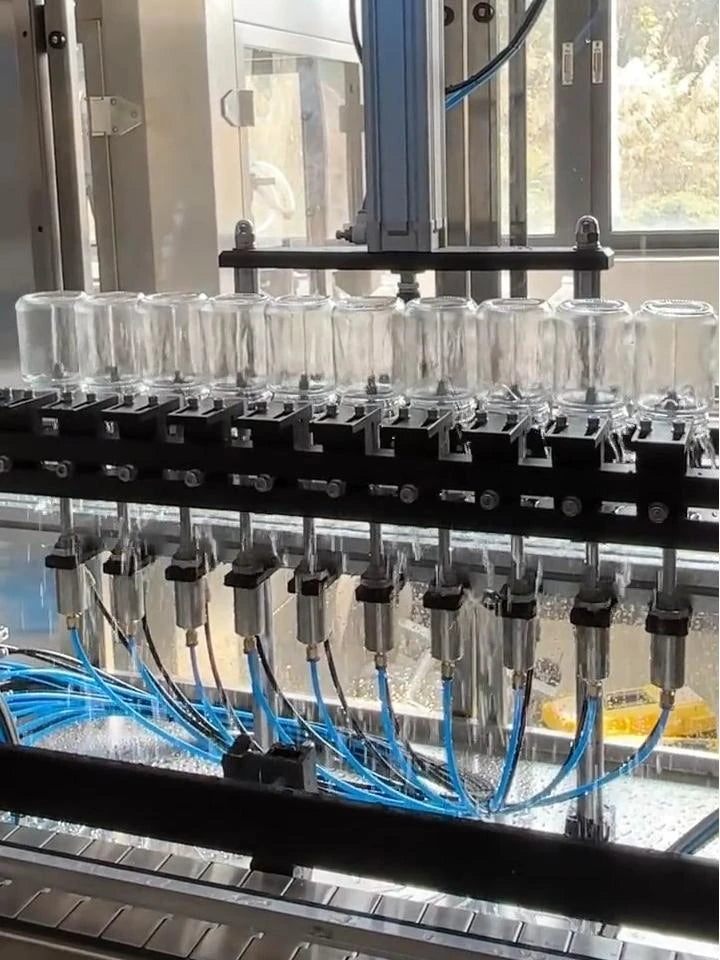
Production equipment is visible. The records connecting the approved specification to each batch are the less visible part buyers also need to check.
That link between specification and execution should remain visible through the factory's filling and packaging route: approved materials and components enter the line, in-process checks are recorded, and the finished batch is held to defined release requirements.
The six-layer evidence chain
| Evidence layer | What to verify | What it does not prove alone |
|---|---|---|
| Legal identity | Entity, address, licence, validity, actual manufacturing site | That the proposed product is within scope |
| Licensed and audited scope | Product category, site scope, certificate holder and status | Finished-product performance or market acceptance |
| Product specification | Formula version, reference sample, acceptance limits and test plan | That the selected package will remain compatible |
| Packaging system | Component codes, supplier, artwork, dosing and compatibility | That substitutions can be made without review |
| Batch control and release | Batch record, in-process checks, results, release status and traceability | That every claim is substantiated for every market |
| Market responsibility | Brand, importer, responsible person, manufacturer and file ownership | That registration equals government approval |
For a practical view of how these layers connect from development through release, compare ELOV's manufacturing process overview with the more detailed production management controls. The first shows the handoffs; the second shows where instructions, checks and records sit inside production.
Packaging evidence is part of the same chain. Component identity, preparation, line clearance and approved artwork cannot be treated as a separate last-minute task.
“FDA compliant” is not a responsibility map
Destination-market work must be checked separately. In the United States, FDA explicitly states that facility registration and product listing are not approval programmes, and that it does not issue certificates for those submissions. The manufacturer or distributor remains legally responsible for product safety.
In the European Union, the Cosmetics Regulation requires manufacture to comply with good manufacturing practice, while the Product Information File includes the manufacturing method and a statement of GMP compliance. Those obligations sit within a broader product and responsible-person framework.
So ask a practical question: who owns each action and record? The brand, importer, responsible person, testing laboratory, packaging supplier, and factory may all hold different parts. “The factory handles compliance” is not specific enough for a purchase order.
Run the check in three stages
01 / Before sampling
Confirm legal entity, site, licensed scope, quality-system evidence, destination market, product category, intended claims, package format, and who will own regulatory files.
02 / Before approval
Freeze the formula and package versions, reference sample, specifications and artwork. Agree the compatibility and product test plan, claim boundary, acceptance limits and change-approval route.
03 / Before production and shipment
Confirm approved components, production instruction, batch traceability, in-process checks, release evidence, coding, retained samples, deviation handling and shipment documents. Check whether the production plan and lead-time assumptions include every approval and handoff rather than only the time on the line.
Five red flags that deserve a second question
- One vague certificate is presented as proof for every product and market.
- A registration or listing is described as government product approval.
- A component or raw-material substitution can be made because it is “equivalent,” without buyer approval.
- A final quotation is offered before the market, package, tests, and claim scope are defined.
- Sample changes are made without a version number or written comparison to the approved reference.
A reliable supplier does not remove the buyer's responsibility. The strongest qualification file is not the one with the most logos. It is the one that lets a new person trace the product from legal factory to approved specification, controlled batch, released shipment, and market owner without relying on somebody's memory.
Primary sources and further reading
- China NMPA, Good Manufacturing Practice for Cosmetics.
- China NMPA, Provisions for the Supervision and Administration of Cosmetics Manufacturing and Marketing.
- ISO, ISO 22716:2007 Cosmetics — Good Manufacturing Practices.
- US FDA, Registration and Listing of Cosmetic Product Facilities and Products.
- US FDA, Product Testing of Cosmetics.
- European Union, Regulation (EC) No 1223/2009 on cosmetic products.
This article provides general supplier-qualification and product-development information. Legal, regulatory, testing, documentation, and market responsibilities depend on the product and destination market.