
Table of contents
Private label and white label are two of the most common phrases in skincare sourcing. They are also two of the least reliable specifications.
One supplier may use private label for a finished stock formula with your logo. Another may use the same phrase for a modified base formula, custom fragrance, exclusive texture and buyer-selected packaging. The words sound precise, but the project behind them may be completely different.
The short answer
White label usually starts with an existing product offered to several buyers. Private label usually allows more control over the product sold under your brand. But the terms are not enough to define a skincare project.
Before comparing quotations, confirm the formula starting point, exclusivity, packaging, tests, minimums, change control and document ownership in writing.
Why the labels are not enough
In day-to-day trade, white label usually means selecting a ready product, applying a brand identity and moving to market with limited changes. Private label often covers a wider range: a ready formula, a modified base or a product developed to a buyer's brief. Some suppliers reverse those definitions. Others use private label as the umbrella term for all three routes.
This is why an early conversation with a private label skincare manufacturer should start with the desired level of control, not the preferred label. A useful supplier should be able to explain what is fixed, what can change, which choices affect testing and MOQ, and what remains available to other buyers.
Factory-side view
Do not ask only, "Is this private label?" Ask, "Which decisions are still mine, and which parts can another buyer order?"
Private label vs white label skincare at a glance
| Project question | Typical white label route | Typical private label route | Full custom development |
|---|---|---|---|
| Formula | Existing and normally unchanged | Existing, adjusted or selected from a development library | Developed against a new brief |
| Speed | Usually fastest after packaging is confirmed | Depends on modifications and approvals | Longest because development and testing start earlier |
| Exclusivity | Usually none unless separately agreed | May cover formula, market, package or a defined period | Negotiated as a separate commercial term |
| Packaging | Stock component with branded label or carton | Broader choice of component, decoration and set format | May include custom tooling and engineering |
| MOQ driver | Filling run, label or carton | Formula batch, component, printing or decoration | Development, tooling, testing and production economics |
| Best used for | Testing demand or filling a range quickly | Building a differentiated branded line | Creating a signature product with a distinct brief |
These are common commercial patterns, not universal rules. A quotation should describe the actual route instead of relying on the column heading.
1. Start with the formula, not the front label
Three products can all be sold as private label while starting from very different places:
- Ready formula: a completed formula is selected without technical changes.
- Modified base: an existing system is adjusted for texture, fragrance, colour, selected ingredients or positioning.
- New development: the formula development process begins from a target user, format, sensory brief, claims direction, package and market.
The first route can reduce development time. It does not remove the need to confirm the exact INCI, product specification, target market and test status. The second route may look like a small adjustment but can reopen stability, compatibility or performance questions. The third gives more freedom, but it also creates more decisions and a longer approval path.
 A marketing term does not control a batch. The approved formula version, material identity, weighing instruction and production record do.
2. Formula ownership and formula exclusivity are different
A brand name on the package does not automatically create ownership of the formula. Paying a development fee does not automatically prevent the supplier from using related technical know-how. Even a genuinely new formula may contain standard bases, common processing methods and widely used ingredients.
Ask the commercial question in plain language:
- Can another buyer purchase this exact formula?
- Does exclusivity apply globally, by market, by channel or for a limited period?
- Is the restriction on the formula, the product concept, the package, or only the artwork?
- What happens to the formula and records if the relationship ends?
If exclusivity matters, it needs scope, duration, territory and exceptions. "Exclusive private label" without those details is a sales phrase, not a usable operating rule.
3. Packaging can turn a simple formula into a custom project
A ready formula does not guarantee a simple order. The bottle or jar, closure, pump, decoration, label, carton, inserts and set configuration can each create a separate supplier minimum or approval step. This is why two skincare factory quotations can look far apart even when both suppliers describe the formula as private label.

A coordinated range may use several containers, pumps, closures and decoration methods. The visual system is one concept; the sourcing commitments are several.
For example, the formula may be available at one minimum, while a custom-colour pump, metallised collar or printed carton requires a larger commitment. A buyer then has four practical options: increase quantity, use a stock component, simplify decoration, or carry excess packaging into a later production run. This formula-to-packaging mismatch is also why the filling and packaging route should be considered before the final component is approved.
Before approving the visual direction, ask for a component-by-component breakdown. The answer should show which items are stock, which are made to order, who owns any tooling, and whether unused components will be stored, shipped or discarded.
4. Testing follows the exact product, not the sourcing label
Calling a formula white label does not make every future package compatible with it. Calling a formula private label does not prove the finished product's stability, microbiological quality, dispensing performance or claims.
The test plan should follow the risk and the market. A change to fragrance, colour, active level, preservative system, fill size, airless pump, dropper or jar can change what needs to be reviewed. The correct product testing route depends on the exact formula-package combination and the claims the brand intends to make.
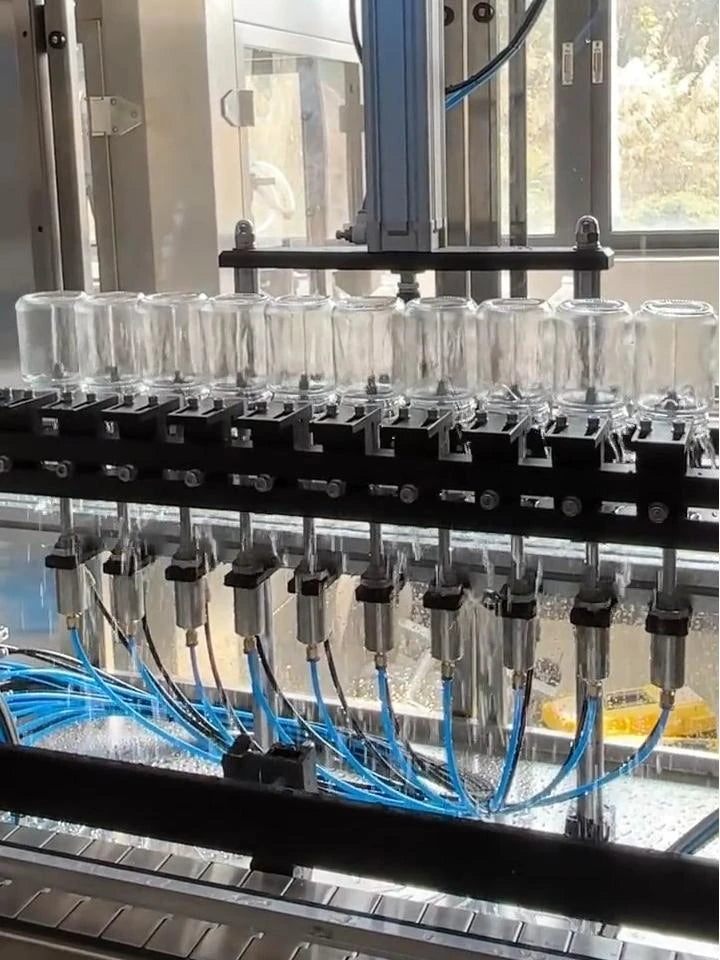
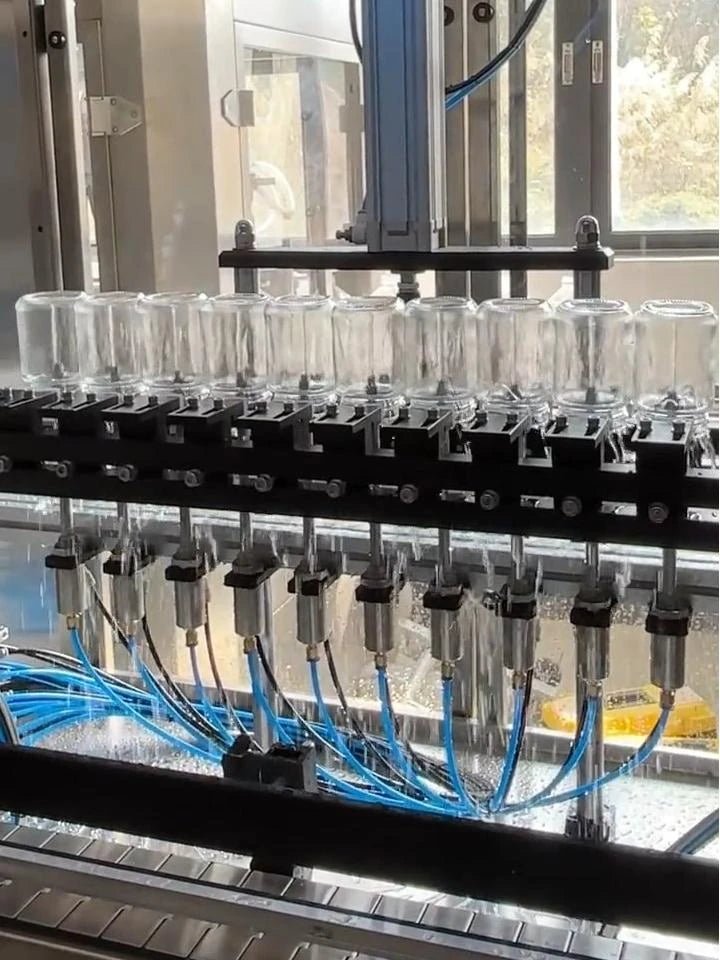
Packaging is part of the finished product system. Component identity, preparation, compatibility and line handling should be defined before commercial production.
5. MOQ belongs to the constraint, not the label
White label is often described as low MOQ and private label as high MOQ. That can be directionally true, but it is not a pricing rule. The real minimum usually belongs to the constraint that cannot be divided economically:
- the smallest controlled formula batch;
- the filling and cleaning economics of the production line;
- the packaging manufacturer's run;
- the printer's colour, plate or decoration setup;
- the carton, insert or set-assembly requirement.
A low formula MOQ can still produce a high packaging commitment. A high formula MOQ can sometimes be divided across several approved formats. The only useful number is the one attached to a defined formula, fill size, package, decoration, quantity split and production plan.
The date on a quotation should also be read as a sequence, not only a number of production days. Sampling, component approval, materials, testing, production scheduling and release still have to happen in order. A sudden sales opportunity does not automatically compress the physical lead time behind a skincare order.
6. Change control matters after the sample is approved
The biggest sourcing surprise often appears on the second order, not the first. A pump is discontinued, a fragrance changes, a raw material has a new supplier, or an "equivalent" bottle is proposed. If the agreement does not define change control, both sides may assume they have authority to make different decisions.
The approved record should identify the formula version, reference sample, component codes, artwork, test plan and acceptance criteria. The production management process should then connect those approved inputs to purchasing, batching, filling, packing and release. Any substitution that could affect appearance, function, safety, claims or market documentation should return to written review.
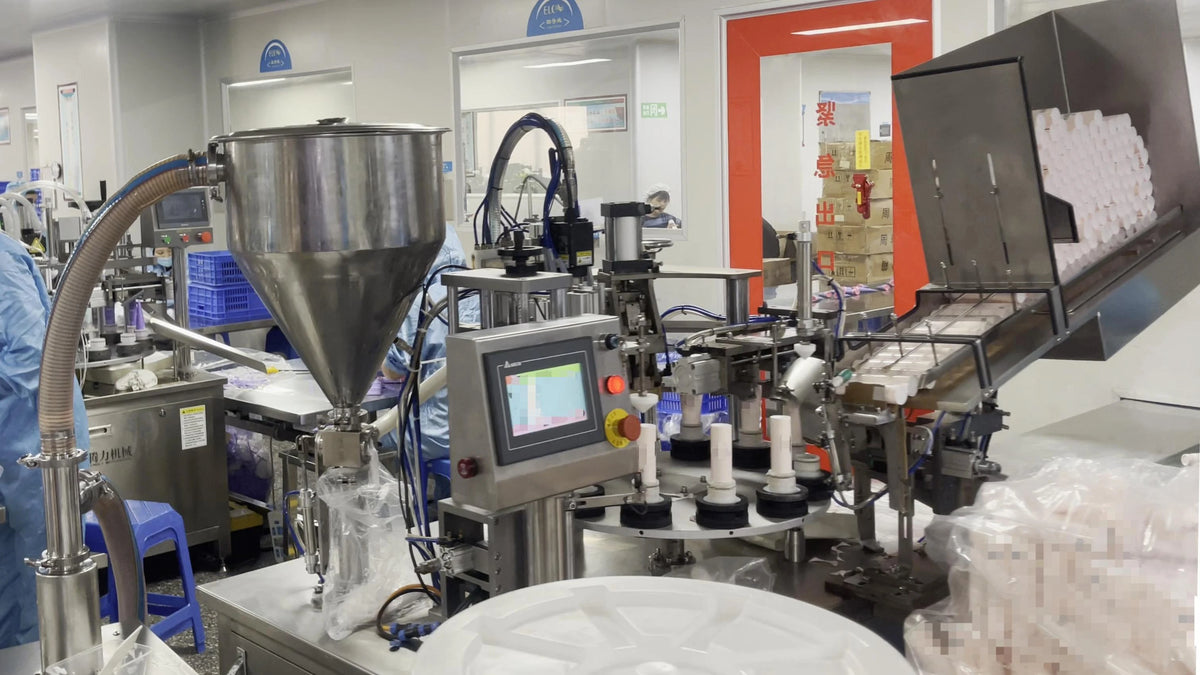
The production route should reproduce an approved product, not reinterpret a mood board. Version control makes that possible across repeat orders.
7. Market responsibility does not disappear with either route
A fast white-label route is still a marketed cosmetic product. A custom private-label route is not automatically approved because it was developed by a factory. The brand, importer, distributor, responsible person and manufacturer may hold different obligations depending on the destination market and commercial arrangement.
In the United States, FDA states that the responsible person must list each marketed cosmetic product, including its ingredients, subject to applicable exemptions. In the European Union, a cosmetic product must have a designated responsible person, and the responsible person must keep the required product information file and ensure the safety assessment is completed before the product is placed on the market.
These rules are one reason a buyer should define file ownership early. Confirm who prepares, holds and updates the ingredient record, product specification, safety and test reports, label review, product listing or notification data, batch documents and adverse-event information. A broad promise that the factory "handles compliance" is not a responsibility map.
The sourcing route also does not replace supplier qualification. Whether the formula is ready or custom, the buyer should still verify the legal factory, relevant scope, approved specification, batch controls and market responsibilities as one connected evidence chain.
Which route fits your brand?
| Your priority | A sensible starting route | What to protect |
|---|---|---|
| Test a category quickly | Ready formula with stock packaging | Clear specification, market fit and realistic reorder continuity |
| Build a recognisable range | Private label with controlled formula and packaging choices | Visual consistency, component availability and change approval |
| Create a hero product | Modified base or full custom development | Brief, evidence, exclusivity terms, files and realistic timeline |
| Enter a new market | The route with the clearest compliant product and document path | Responsible parties, label, evidence, notification or listing, and records |
Many brands use more than one route. A ready formula can test demand; a modified version can create differentiation after the category proves itself; full development can be reserved for the product that deserves the extra time and investment. The sequence matters more than the label.
What to send before asking for a quotation
A supplier can give a more reliable answer when the first brief contains the commercial decisions behind the terminology:
- Destination market and sales channel.
- Target user, product format, texture and claims direction.
- Ready formula, modification or new development.
- Fill size, packaging reference, decoration and set configuration.
- Expected first order, annual volume and quantity split.
- Required exclusivity, tests, documents and target launch date.
Then compare quotations line by line. Check whether each offer includes the same formula route, package, testing scope, documentation, decoration, freight basis and approval timeline. If those inputs differ, the prices are not answering the same question.
The short version
White label skincare usually buys speed by starting from a product that already exists. Private label skincare usually offers more control over formula, packaging or positioning. Full custom development begins from a new brief. In practice, suppliers use the terms differently, so none of those labels is a complete specification.
The useful comparison is what the buyer can change, what another buyer can order, which constraint sets the MOQ, which tests cover the exact finished product, how substitutions are approved, and who owns the files. Define those points first. The correct name for the route can come second.
Primary sources and further reading
- US FDA, Registration and Listing of Cosmetic Product Facilities and Products.
- US FDA, Modernization of Cosmetics Regulation Act of 2022.
- European Union, Regulation (EC) No 1223/2009 on cosmetic products.
- ISO, ISO 22716:2007 Cosmetics - Good Manufacturing Practices.
This article provides general product-development and sourcing information. Definitions, contracts, testing and regulatory responsibilities vary by supplier, product and destination market.