
Table of contents
Varios informes recientes sobre el cuidado de la piel apuntan en la misma dirección. Los compradores no solo piden nuevos ingredientes. Piden que las categorías de productos conocidas funcionen mejor.
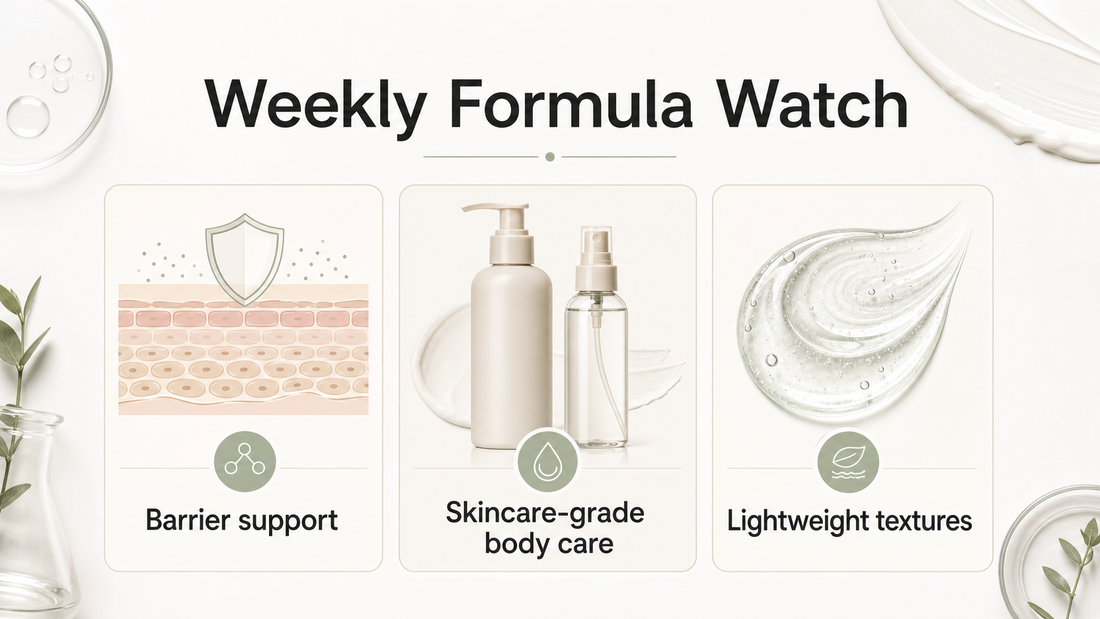
Las señales repetidas son claras: lenguaje de apoyo a la barrera cutánea, cuidado corporal con una sensación de cuidado facial y texturas más ligeras que aun así se sientan eficaces.
Señal del mercado esta semana
El informe de fórmula se está volviendo más específico. Los compradores no solo preguntan qué ingrediente está de moda. Preguntan cómo debe sentirse el producto, dónde se venderá, cómo debe empaquetarse y qué precio debe alcanzar.
Eso suena sencillo. No lo es. Cada dirección cambia el informe del producto. Afecta la textura, la carga activa, el empaque, el costo, el lenguaje de las afirmaciones y las expectativas de muestreo.
| Señal de fórmula | Lo que piden los compradores | Qué verificar primero |
|---|---|---|
| Soporte de barrera | Confort, resiliencia, uso diario suave y una historia más sólida sobre la salud de la piel. | Textura, fragancia, carga activa, lenguaje de afirmación y objetivo de costo. |
| Cuidado corporal de grado facial | Productos corporales que hacen más que hidratar o oler bien. | Configuración de uso, perfil de aroma, acabado, empaque y posicionamiento en el mercado. |
| Texturas ligeras | Sensación fresca, rápida absorción, baja pegajosidad y rendimiento visible. | Estabilidad, compatibilidad activa, sensación en la piel y costo objetivo. |
La reparación de barrera ahora afecta a todo el informe
La reparación de barrera ya no es solo una solicitud de ingredientes. En muchos informes, se ha convertido en una posición del producto.
El comprador puede mencionar ceramidas, pantenol, beta-glucano, péptidos, ingredientes amigables con el microbioma o botánicos calmantes. Pero la lista de ingredientes es solo el comienzo. Un producto de apoyo a la barrera también necesita la base adecuada, la sensación en la piel, la decisión de fragancia, el sistema conservante y el lenguaje de las afirmaciones.
Nota de la fábrica: una crema rica, una crema en gel, un suero y un bálsamo pueden llevar una historia de barrera. No servirán al mismo cliente.
Antes de que comience el desarrollo, los compradores deben establecer algunos puntos:
- ¿El producto es para piel seca, piel sensible, reparación diaria o confort post-tratamiento?
- ¿La textura debe sentirse rica, fresca, acolchada o de rápida absorción?
- ¿La fragancia apoyará la historia del producto o la debilitará?
- ¿El costo objetivo permite niveles significativos de los ingredientes elegidos?
- ¿Puede el lenguaje de las afirmaciones funcionar en el mercado de ventas previsto?
Un producto de barrera puede fallar incluso cuando la lista de ingredientes parece correcta. El producto tiene que sentirse como la afirmación. Si la textura, el aroma, el empaque y el precio envían un mensaje diferente, la fórmula se vuelve más difícil de vender.
El cuidado corporal exige un estándar más alto
Los informes de cuidado corporal también están cambiando. Más compradores están pidiendo productos corporales que hagan más que hidratar u oler bien.
Esto puede significar un gel de ducha en suero, una leche corporal ligera, una bruma corporal con una historia de frescura, un producto corporal exfoliante o una loción corporal con una afirmación más activa. La categoría sigue siendo práctica, pero las expectativas están aumentando.
Una loción corporal básica y una leche corporal con posicionamiento de cuidado de la piel no son el mismo proyecto. Una bruma corporal con fragancia y una bruma de frescura hidratante tampoco son el mismo proyecto.
Por qué esto cambia el desarrollo
Los productos corporales se enfrentan a diferentes condiciones de uso: ducha, bolsa de gimnasio, viajes, clima cálido, gran superficie, uso diario repetido. Eso cambia la conversación sobre la fórmula y el empaque.
Los buenos informes de cuidado corporal suelen responder a estas preguntas al principio:
- ¿El producto es principalmente funcional, sensorial o ambos?
- ¿El mercado del comprador aceptará fragancia, o necesita un perfil de aroma más ligero?
- ¿La historia principal es hidratación, exfoliación, frescura, confort o mejora de la apariencia?
- ¿El paquete se usará en la ducha, después de la ducha, para viajar o como regalo?
- ¿El acabado debe ser no pegajoso en climas húmedos?
El cuidado corporal puede parecer más fácil que el cuidado facial desde fuera. En el desarrollo real, la mayor área de uso y las expectativas sensoriales más fuertes a menudo hacen que el informe sea más exigente.

Las texturas ligeras siguen siendo difíciles de ejecutar bien
Ligero es una de las palabras más comunes en las conversaciones con los compradores. También es una de las palabras más fáciles de malinterpretar.
Una textura ligera no significa una fórmula sencilla. Los compradores pueden querer una absorción rápida, baja pegajosidad, un acabado fresco, una comodidad visible para la piel y una historia de activos más fuerte en el mismo producto. Esa combinación necesita un equilibrio cuidadoso.
Por eso las cremas en gel, las lociones lechosas, las cremas acuosas, los sueros ligeros, los geles de ducha en suero y las leches corporales no grasas siguen apareciendo en las discusiones de productos. Se adaptan a climas húmedos, rutinas de capas, uso de protector solar y consumidores a quienes no les gusta el residuo pesado.
| Lo que el comprador quiere | Lo que la fábrica tiene que equilibrar |
|---|---|
| Sensación de piel fresca | Rendimiento hidratante suficiente. |
| Absorción rápida | Estabilidad de la fórmula. |
| Baja pegajosidad | Carga de ingredientes activos. |
| Sensación sensorial premium | Costo objetivo. |
Una muestra puede parecer atractiva el primer día y aun así necesitar trabajo después de las pruebas de estabilidad o las verificaciones de compatibilidad del empaque. Esto es especialmente cierto cuando el comprador quiere una textura ligera y una afirmación funcional fuerte.
Lo que los compradores a menudo pasan por alto
Cuando una dirección de fórmula se vuelve popular, los compradores a menudo se centran primero en la lista de ingredientes. Eso es comprensible. También es incompleto.
Lista de verificación del comprador antes de la cotización
- ¿Cuál es el precio minorista objetivo?
- ¿Para qué mercado y canal de venta es el producto?
- ¿Qué debe sentir el cliente en los primeros 10 segundos?
- ¿Qué afirmaciones son esenciales y cuáles son opcionales?
- ¿Qué formato de empaque se prefiere?
- ¿La prioridad es el rendimiento, la sensación sensorial, el control de costos o la rapidez en la comercialización?
Estas respuestas ayudan al proveedor a comprender el camino real: una fórmula de marca blanca lista, una pequeña modificación o un proyecto de desarrollo más personalizado.
Conclusión del lado de la fábrica
Las señales de fórmula más fuertes esta semana no son las más ruidosas. Son las direcciones que conectan el interés del consumidor con el desarrollo práctico: soporte de barrera, cuidado corporal de grado facial y texturas ligeras.
Para los compradores, la pregunta útil no es "¿Esta tendencia es popular?". La mejor pregunta es: ¿pueden la fórmula, la textura, el empaque, la afirmación, el costo y el canal sobrevivir al mismo informe?
Principio de trabajo: una tendencia comienza a convertirse en producto solo cuando la fórmula, el paquete, la afirmación, el costo y el canal pueden funcionar juntos.